Protection from insurer pressure
We take over communications so you are not pushed into recorded statements, quick settlements, or broad medical releases that can be used to minimize your injuries.
Accident representation · Atlanta, Georgia
If you were hurt in a crash, you need a legal plan that protects medical care, preserves evidence, and forces insurers to value your claim fairly. Our team handles the investigation and negotiations so you can focus on recovery.

Protect the record early
After an accident, the insurance process moves fast. Statements get taken, vehicles get repaired or salvaged, and digital evidence can disappear. Working with accident lawyers in Atlanta early helps you control the timeline, document injuries properly, and avoid mistakes insurers may later use to dispute fault or reduce damages.
Our work starts with a practical goal: build a claim that can be proven. That usually means gathering the crash report, locating video and witnesses, identifying all insurance policies that may apply, and documenting medical treatment in a way that matches the legal elements of a Georgia injury claim.
If you are comparing accident attorneys in Atlanta, focus on who will actually investigate, communicate with medical providers, and negotiate from a position backed by evidence—not just paperwork.
Liability and loss documentation
A strong claim is more than a stack of bills. It is a clear, organized explanation of what happened, why the other party is legally responsible, and how the injuries changed your life.
Typical evidence includes the Georgia crash report, scene photos, vehicle damage documentation, witness statements, and available traffic-camera, business, or dash-cam video. Serious cases may also require 911 and dispatch records or accident reconstruction when the physics of the collision matters.
On the damages side, counsel should connect medical treatment to the collision and timeline. That can include ER records, imaging, specialist notes, therapy logs, prescriptions, and future-care recommendations. Lost-income proof may involve pay stubs, tax records, or employer verification.
Pain and suffering damages rely on consistent medical notes and a credible narrative, so treatment gaps and casual remarks to insurers can cause real harm.
Commercial-vehicle or catastrophic-injury claims may require trucking-specific evidence preservation, additional policies, and federal compliance records.
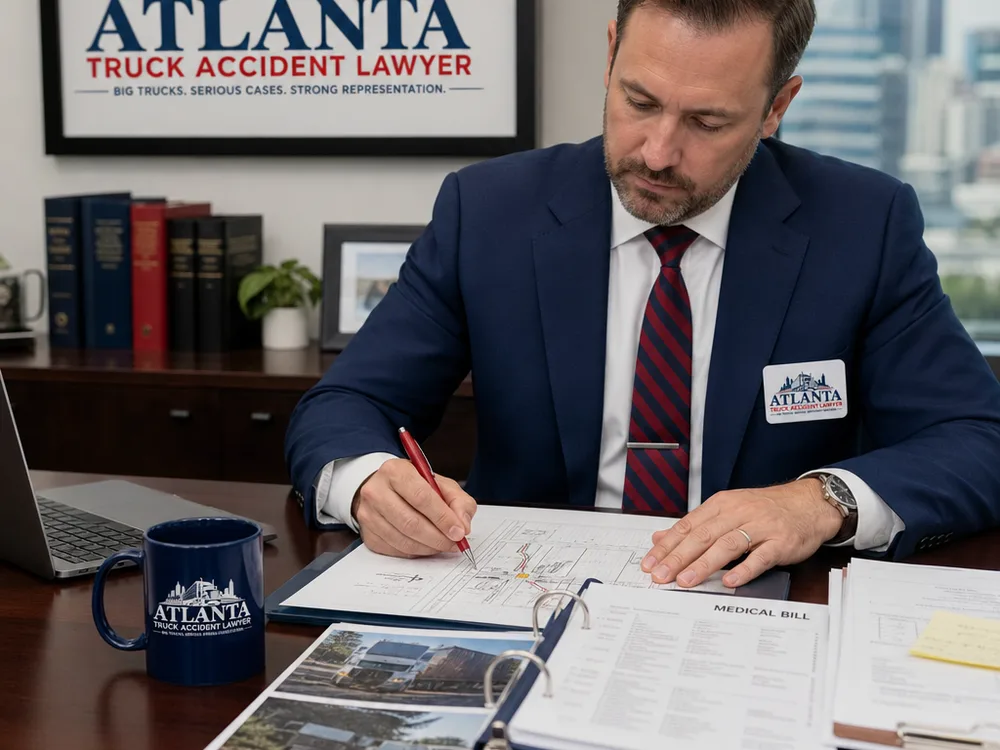
Representation with a plan
We take over communications so you are not pushed into recorded statements, quick settlements, or broad medical releases that can be used to minimize your injuries.
Fault can involve more than one driver. We look at employer liability, vehicle ownership, negligent entrustment, and uninsured or underinsured coverage where it applies.
We track treatment, request records, and help make sure your damages file matches the medical timeline, especially when referrals and follow-ups take months.
We prepare the claim to hold up in negotiation and, if needed, litigation. That requires documentation, consistency, and readiness to explain the numbers.
You will know when it makes sense to negotiate, when the insurer is stalling, and when filing suit is the practical next step.
A disciplined claim sequence
We start with what happened, what treatment you have had, and what the insurer has already asked for. If time-sensitive evidence may exist, we move quickly to preserve it.
We gather reports, photos, and witness information, and identify the insurance policies and coverage issues that will control how the claim is paid.
We track treatment and collect records and bills. For wage loss, we gather documentation showing time missed and work limitations.
We present liability and damages clearly, then negotiate directly with the carrier. If the insurer disputes fault or value, we respond with evidence rather than guesses.
If a fair settlement is not offered, we can file suit and advance the case through discovery, motion practice, and mediation, preparing for trial if needed.
Questions that reveal the difference
Search results for accident lawyers Atlanta can look the same. The differences show up in how cases are developed and how clients are treated day to day. These questions get you useful information quickly:
You do not need an attorney who promises a number. You need accident attorneys in Atlanta Georgia who can explain the process, protect the evidence, and show you the decision points controlling risk and timing.
If you are still in the first days after a collision, prioritize medical care, save photos and messages, and avoid giving the insurer more than basic facts until you have legal guidance. The right early plan can prevent months of avoidable disputes.
If you were injured and the insurance company is already asking questions, get a case review while evidence is still available and your medical documentation is still being created.
Call for a Free QuoteAnswers before you decide
Contact an attorney as soon as you can safely do so, ideally before you give a recorded statement or sign medical authorizations for the insurer. Early help matters because video and witness recollection can fade quickly, and Atlanta-area highway crashes may involve multiple vehicles and insurers from day one.
Disputed fault is common and does not end your claim. Counsel can collect objective proof such as the crash report, vehicle-damage angles, scene photos, and available video, then build a liability narrative addressing lane position, right of way, and timing.
Yes, many claims can proceed through uninsured or underinsured motorist coverage if it exists on an available policy. Every potentially applicable policy should be identified early while notice and cooperation requirements are met and the other driver's fault and your damages are documented.
Many claims take months rather than weeks because value often cannot be assessed until medical treatment stabilizes and records are complete. Timing depends on injury severity, disputed liability, provider response times, and whether litigation becomes necessary.
A claim typically seeks medical expenses, lost wages, and pain and suffering, and may include future medical care and loss of earning capacity. Recoverable damages depend on the facts, available insurance coverage, and documentation connecting the collision to treatment and its impact on your life.
Bring whatever you have: the crash report or report number, photos and videos, witness names, insurance information, and medical paperwork from urgent care, the ER, or follow-up providers. If you do not have everything, a consultation can still identify next steps and evidence to request.
Share what happened and what treatment you have had so far. We will outline the claim strategy, the information needed to investigate, and what to expect when dealing with insurers.