Medical costs and future care
We document ER care, surgery, rehab, specialists, medication, and projected treatment needs so the claim reflects the full medical picture, not just the first round of bills.
Tractor-trailer accident claims · Atlanta, Georgia
After a semi-truck crash, evidence disappears fast and insurers move faster. We investigate, deal with adjusters, and pursue the full value of your injury claim while you focus on treatment.
Commercial claims demand a different approach
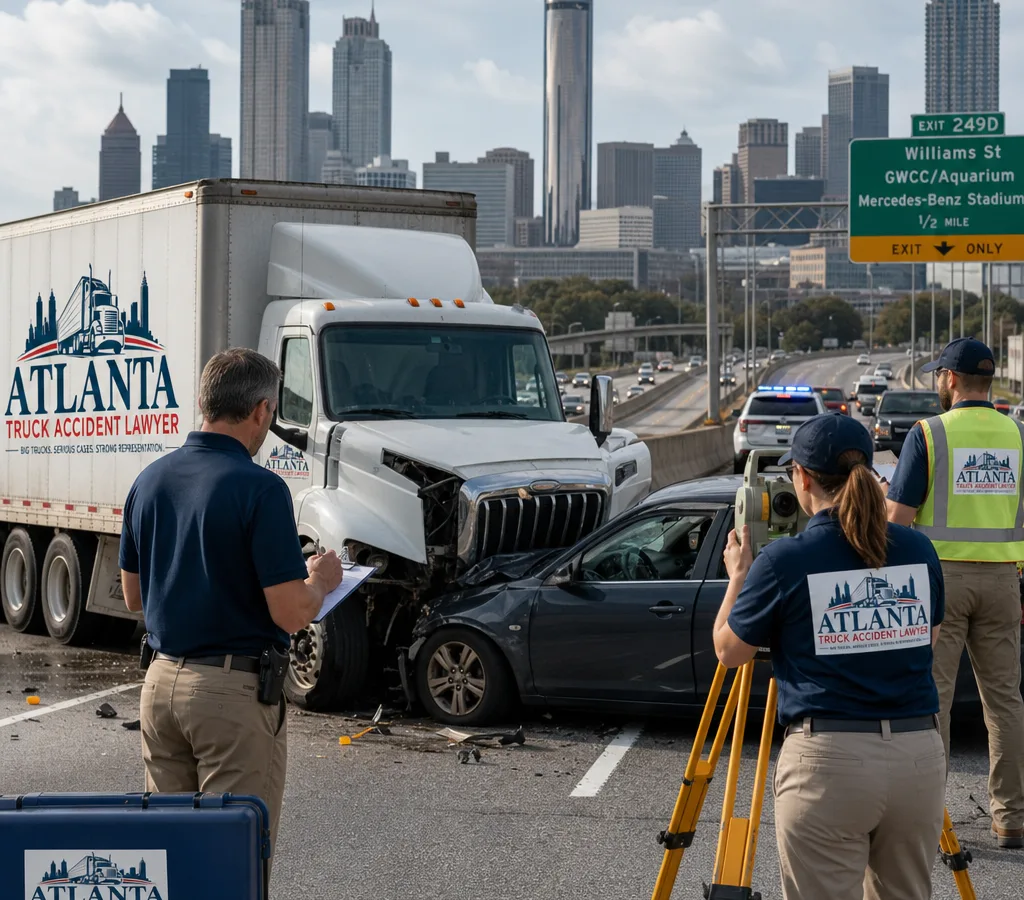
If you were hit by a tractor-trailer, you are not dealing with a normal fender bender. A serious crash can involve a commercial driver, a motor carrier, a trailer owner, a freight broker, a shipper, and multiple insurance layers. An Atlanta tractor-trailer accident lawyer builds the case around the evidence that matters in trucking claims, then uses it to prove fault and damages.
We start by identifying every potentially responsible party and the insurance policies that may apply. Liability can turn on records that are easy to lose, including driver logs, dispatch records, maintenance files, pre-trip inspection reports, load paperwork, and electronic data such as ECM or telematics.
Preserving those materials early can determine whether a claim is valued fairly or treated like a standard auto claim.
Atlanta truck crashes can also involve interstate collisions, multi-vehicle chain reactions, and rapid scene clearance. Our role is to step in early, control insurer communication, and advance the claim according to the seriousness of the injuries.
Evidence first
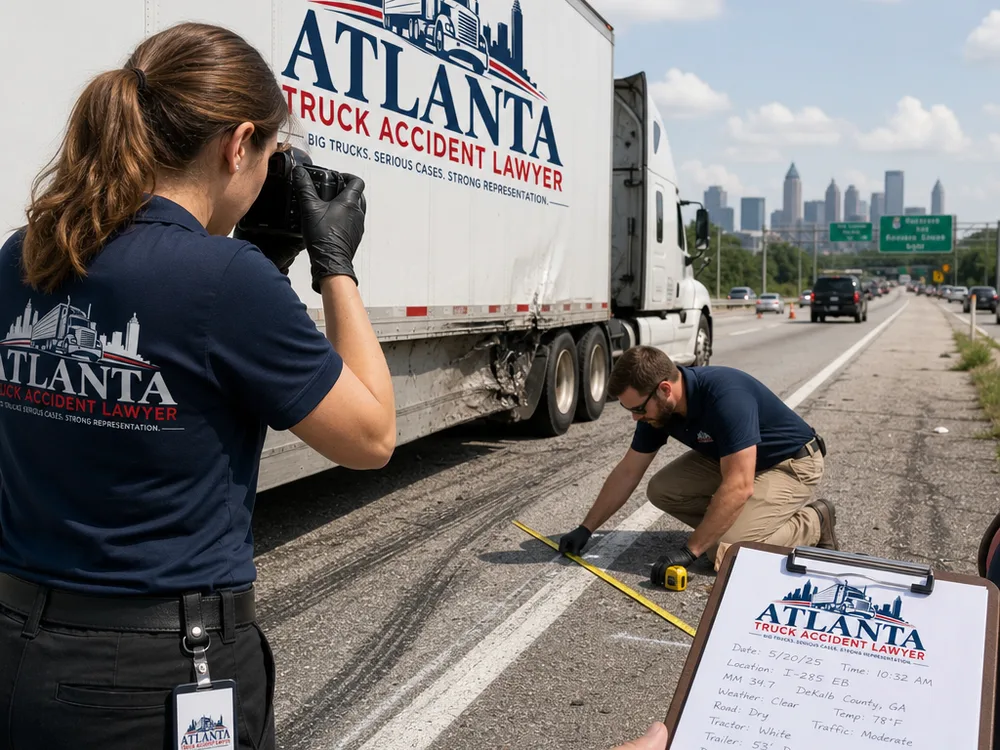
A strong trucking case is evidence-first. We work to secure what the carrier and insurers rely on internally, not just what appears in a police report.
Common investigation steps include:
When needed, we coordinate with qualified specialists, such as crash reconstruction or trucking safety experts, to translate technical records into a clear liability account for negotiations or trial.
Documenting the complete loss
We document ER care, surgery, rehab, specialists, medication, and projected treatment needs so the claim reflects the full medical picture, not just the first round of bills.
Pay stubs are only the start. We build proof for missed time, reduced capacity, and the real effect of injuries on job duties.
We develop evidence of symptoms, restrictions, and recovery time so non-economic damages are supported.
Vehicle damage, towing, rental costs, out-of-pocket medical items, and other documented expenses can add up quickly.
When a truck crash is fatal, we guide families through the claim and the documentation needed to pursue the damages Georgia law allows.
Roadway and jurisdiction context
Where and how a crash happens can shape the available evidence, the responding agency, and the injury story.
Discuss Your Case With UsInterstates such as I-75, I-85, I-20, I-285, and the Downtown Connector are major commercial-freight corridors. They also produce recurring collision patterns, including merging conflicts, sudden slowdowns, and multi-vehicle pileups.
Dense traffic, frequent lane changes, and short merge zones can turn a minor error by a large truck into a major impact.
Heavy congestion around major arterials increases rear-end and lane-change collisions involving delivery and commercial traffic.
Freight routes and industrial access roads can mean greater tractor-trailer volume and more disputes over turning movements and right-of-way.
A mix of commuter routes and truck traffic can produce serious collisions at higher speeds, including in the 30349 area.
If a crash occurred in Fulton County or a nearby jurisdiction, the court location, responding agency, and roadway features can affect how quickly records become available and what should be requested first. We account for those realities so evidence does not go stale.
Non-commercial collision claims require a different investigative approach. Truck accident representation in Atlanta is built around commercial records, multiple business relationships, and potentially layered insurance coverage.
A structured path forward
We listen to what happened, review what you have, and identify time-sensitive steps such as preserving records, gathering medical documentation, and stopping direct insurer pressure.
We collect the trucking documents and data that establish fault, organize injury proof, and evaluate all potential insurance coverage paths.
We present a supported demand package and negotiate based on liability proof and documented damages, not a quick adjuster estimate.
If the carrier or insurer will not make a fair offer, we prepare the case for court, conduct discovery, take depositions, and maintain pressure through motion practice and trial preparation.
If adjusters are calling or asking you to sign releases, get legal guidance first so you do not surrender leverage or overlook damages that belong in a truck crash claim.
Call for a Free QuoteAnswers about trucking claims
In many Georgia injury cases, the deadline is two years from the date of injury, but key trucking evidence can be lost far sooner. Speak with an Atlanta tractor-trailer accident lawyer promptly so preservation requests and record collection begin while data and documents remain available.
An independent-contractor label does not automatically shield a motor carrier or other parties from responsibility. The answer depends on who controlled the work, who owned the equipment, what the contracts say, and how the carrier operated. We investigate relationships among the driver, motor carrier, and other entities connected to the load.
Important evidence commonly includes driver log and dispatch records, maintenance and inspection files, onboard electronic data when available, load documents, and witness or video evidence. Because Atlanta corridors can clear quickly, early scene photos, vehicle inspections, and preservation demands can be especially important.
You are not required to help the other side build defenses, and a recorded statement can be used to minimize injuries or shift fault. It is generally safer to direct communication through counsel, who can provide basic claim details without exposing you to unfair questioning.
Georgia uses a modified comparative fault rule. Recovery may be reduced if you share blame and may be barred if you are 50% or more at fault. Because trucking cases often involve complex causation, documenting driver and carrier conduct is important to ensure fault is allocated from evidence rather than assumption.
Some claims resolve in months, while severe injury or disputed-liability cases often take longer, particularly when litigation is necessary. Timing depends on medical treatment, the complexity of the trucking records, the number of parties involved, and whether the insurer makes a fair pre-suit offer.
Most serious-injury truck accident cases are handled on a contingency fee, meaning the attorney fee is a percentage of the recovery and is owed only if compensation is obtained. Exact terms, including how case costs are handled, should be explained clearly in writing at the beginning of representation.
Share what happened and what you are dealing with medically. We will outline next steps for preserving evidence, valuing damages, and pursuing a claim that matches the seriousness of a tractor-trailer collision.