Evidence preservation and fast investigation
Surveillance video, incident reports, cleaning logs, and witness names can disappear quickly. Early action helps keep the record intact.
Slip and fall representation · Atlanta, Georgia
If you were hurt on someone else's property, an attorney can preserve evidence, deal with insurers, and build a claim that accounts for medical care, missed work, and long-term limits.
Protect your health and the evidence
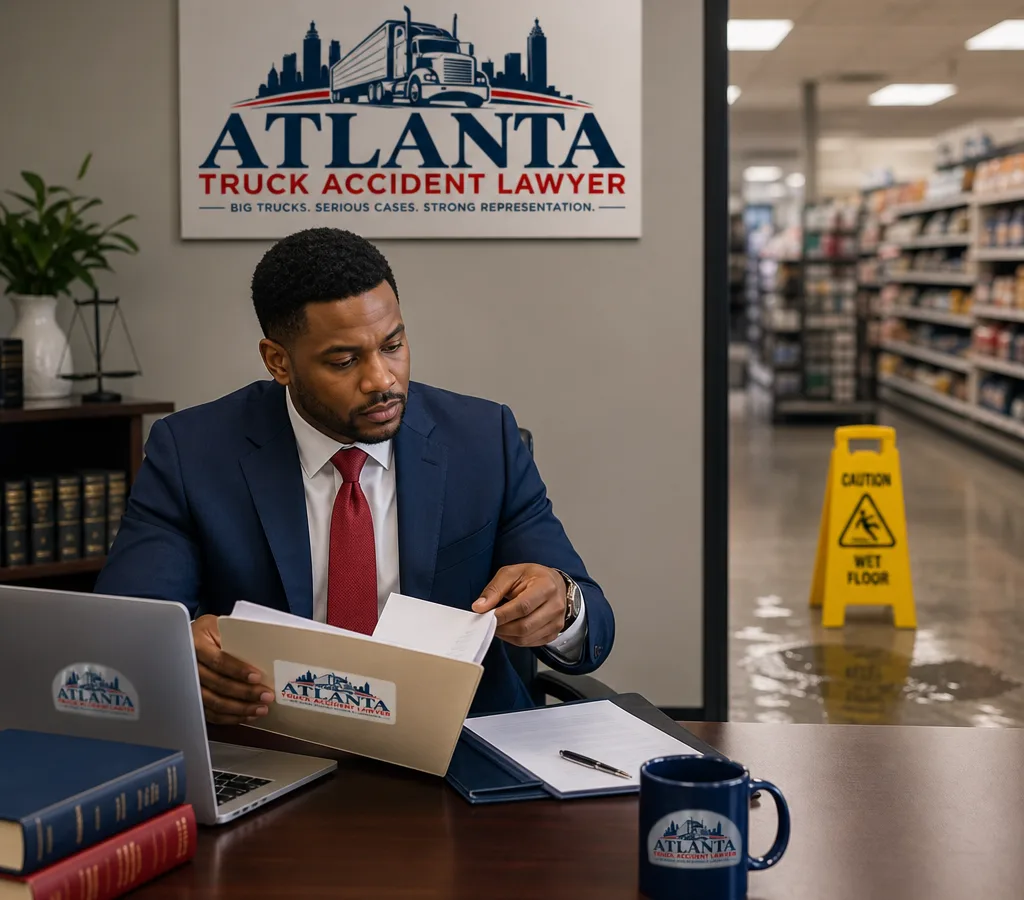
Searching for slip and fall attorneys in Atlanta, Georgia usually means you are dealing with two problems at once: getting treatment and getting answers from an insurer that may already be trying to minimize the claim. In Georgia, these cases often turn on proof that the property owner or business knew, or should have known, about a hazard and failed to fix it or warn people.
Get checked out, report the incident, photograph the area, and record witness names while the details are still available.
Atlanta claims can arise in grocery and big-box stores, apartment and condominium common areas, parking lots, hotels, office buildings, and public-facing venues. Lighting, cleaning logs, weather, stairs, handrails, curb markings, and employee conduct can all affect the analysis.
Liability begins with the details
Slip and fall lawyers Atlanta residents hire generally focus on a few core questions because those questions decide liability and the value of the case.
What was the hazard? Common examples include liquid on tile, slick entryways during rain, uneven pavement, broken stair treads, loose mats, cluttered aisles, or unmarked changes in elevation.
Who controlled the area? A retail tenant, property management company, cleaning contractor, or owner may be responsible depending on the lease and who maintained the space.
What did they know, and when? Actual or constructive knowledge may be shown through employee statements, inspection routines, time-stamped video, maintenance requests, prior complaints, and safety policies.
What did the fall cost you? A slip and fall attorney should connect the incident to medical records, missed work, and lasting symptoms. Fractures, head injuries, and soft-tissue injuries can present differently, making early documentation important.
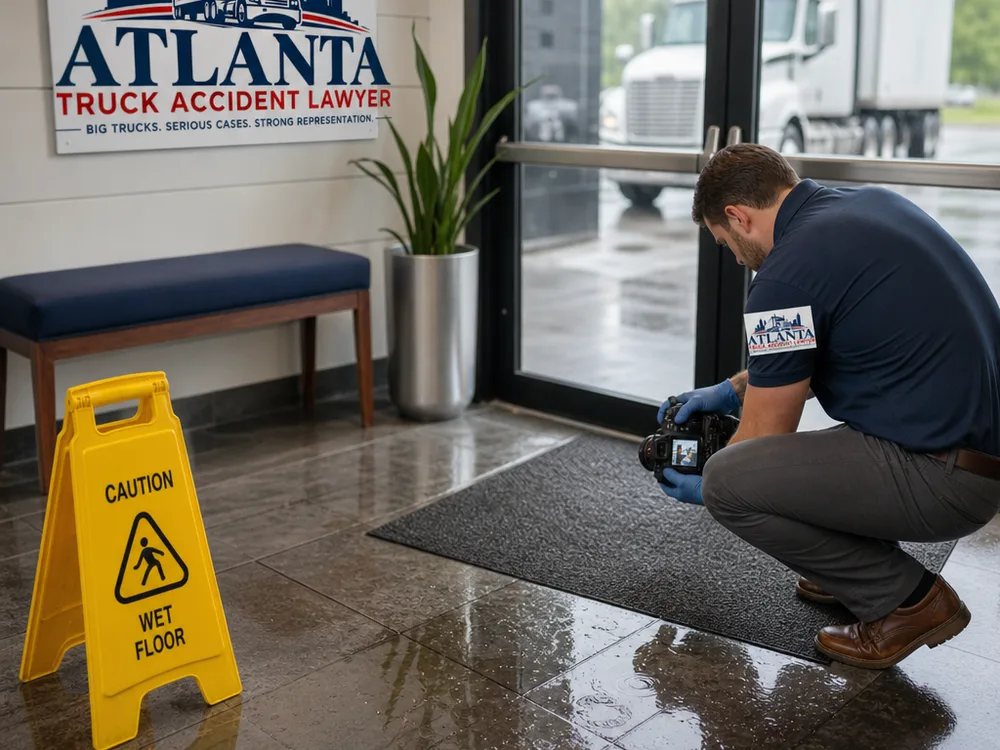
Metro Atlanta rainfall can turn entrances and parking lots into higher-risk zones. Wet-floor procedures, absorbent mats, and warning signage often become central evidence in rainy-day falls at busy storefronts.
Building liability and damages
Surveillance video, incident reports, cleaning logs, and witness names can disappear quickly. Early action helps keep the record intact.
Your lawyer evaluates duty, knowledge, and whether the hazard was foreseeable, including warning signs, inspections, and maintenance practices.
A claim is only as strong as its medical support. Consistent treatment notes, diagnoses, imaging, and restrictions should reflect what you are living with.
Insurers often ask questions designed to shift blame or minimize injuries. An attorney can manage communications and keep the focus on provable facts.
A fair demand usually considers follow-up care, therapy, lost income, future limitations, and the injury's effect on daily life.
If the carrier will not offer a reasonable amount, preparation for suit, discovery, and depositions can change the leverage in the case.
Atlanta premises context
Atlanta premises cases often reflect how different parts of the city are used, but the practical issue remains whether a preventable hazard was left unaddressed.
Discuss Your Case With UsHeavy pedestrian flow around offices, hotels, and events puts attention on maintenance and warning practices in lobbies, elevators, and parking decks.
Commercial properties may include valet areas, multi-level parking, and busy retail entrances where lighting, curb edges, and flooring transitions matter.
Falls in smaller stores, older sidewalks, or mixed-use properties may require sorting out maintenance duties between a business and landlord.
Apartment complexes, shopping centers, and parking lots can raise questions about uneven pavement, drainage, lighting, and maintenance response times.
No matter the neighborhood, the analysis focuses on whether the hazard was preventable and whether evidence shows the owner or operator failed to address it in time.
A practical claim sequence
We listen to what happened, identify the property and businesses involved, and review the injuries, treatment, and missed work so far.
We request incident reports and available video, send preservation notices, and collect photos, witness information, and relevant maintenance records.
We organize medical records, bills, and wage information and build a demand package that ties the evidence to a clear liability theory.
We handle adjuster communications and settlement talks with the goal of a resolution that reflects the real cost of the injury.
If the insurer refuses a fair offer, we discuss filing suit and the timeline for discovery, depositions, motions, and trial preparation.
If you are unsure whether the property owner's insurer is treating your claim fairly, a quick case review can clarify liability, next steps, and what evidence should be preserved now.
Call for a Free QuoteCompare proof, planning, and communication
When comparing attorneys, focus on how they handle proof and pressure points. Ask who will investigate and what they do in the first few days. Preserving video, identifying the correct defendant, and locating policies and logs often determine whether the claim gets traction.
Ask how comparative fault will be evaluated. Georgia premises claims frequently involve arguments that you should have seen the hazard, that a warning sign was present, or that footwear caused the fall. A practical attorney should explain how those defenses can be addressed with facts.
Ask how medical records and lost income will be documented. The plan should account for ongoing symptoms, follow-up care, restrictions, and missed time from work.
Different incidents require different investigations. Commercial-truck collisions, for example, involve evidence and insurance questions that differ from premises liability.
Answers about Georgia premises claims
You may have a case if the evidence shows the store created the hazard or had enough time to discover and fix it before you fell. These claims often rely on surveillance video, cleaning schedules, employee statements, and whether warning signs or mats were used appropriately.
That argument is common in Georgia premises cases, but it does not automatically defeat a claim. The issues include whether the hazard was reasonably noticeable and whether the owner had superior knowledge, supported by video, lighting, signage, prior complaints, or maintenance history.
As soon as you can, because video footage and witness memories can disappear within days. Early legal help can also prevent mistakes with recorded statements and help document the injury properly from the start.
Get photos of the hazard, surrounding area, injuries, shoes, and warning signs, and request the incident report if one is made. Record witness details and note cameras aimed at the area so footage can be preserved.
Yes. These claims may involve poor lighting, uneven pavement, stairs, or drainage issues. The analysis often turns on who controlled maintenance, how long the condition existed, and whether prior reports or repair requests show it was known.
Many claims take months rather than weeks because value depends on medical treatment and proof of liability. A claim may take longer when fault is disputed, ongoing care is required, or a lawsuit is necessary to obtain evidence through discovery.
It is usually better to get legal advice first because a recorded statement can lock you into wording later used to argue that you admitted fault or minimized symptoms. An attorney can manage communications so the claim remains accurate and consistent with the evidence.
Share where the fall happened, what caused it, and what treatment you have had so far. We will explain what evidence matters in Georgia premises cases and what a fair claim should account for.